Problem framing
Our user research team conducted exploratory user research with 22 parents in the US and UK to understand the problem space. This research, alongside background research into the area resulted in the findings below.
The problem
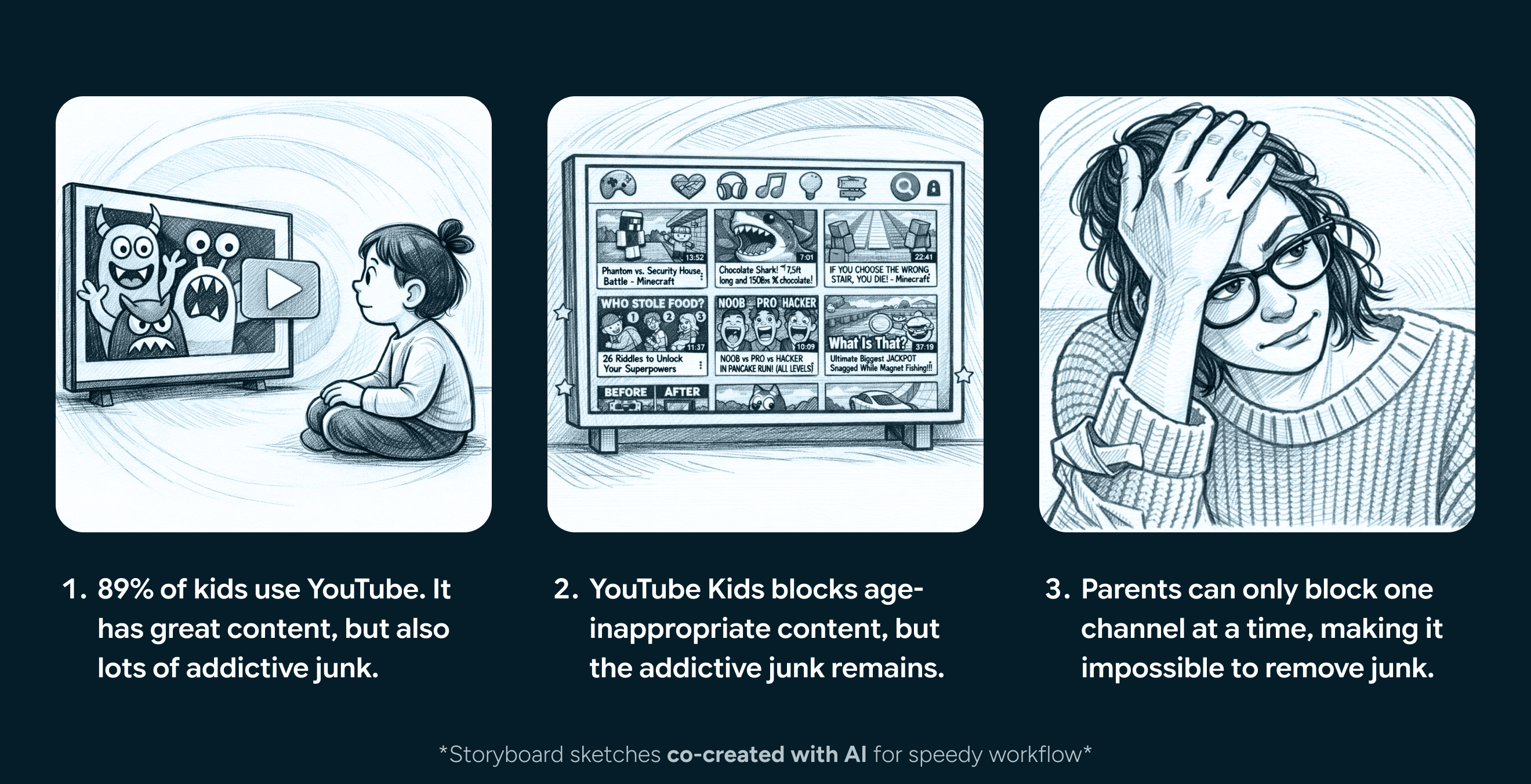
Parents notice their kids spending a lot of time watching addictive junk on YouTube, and even on YouTube Kids, blocking channels only works one at a time.
The user • Archetypes
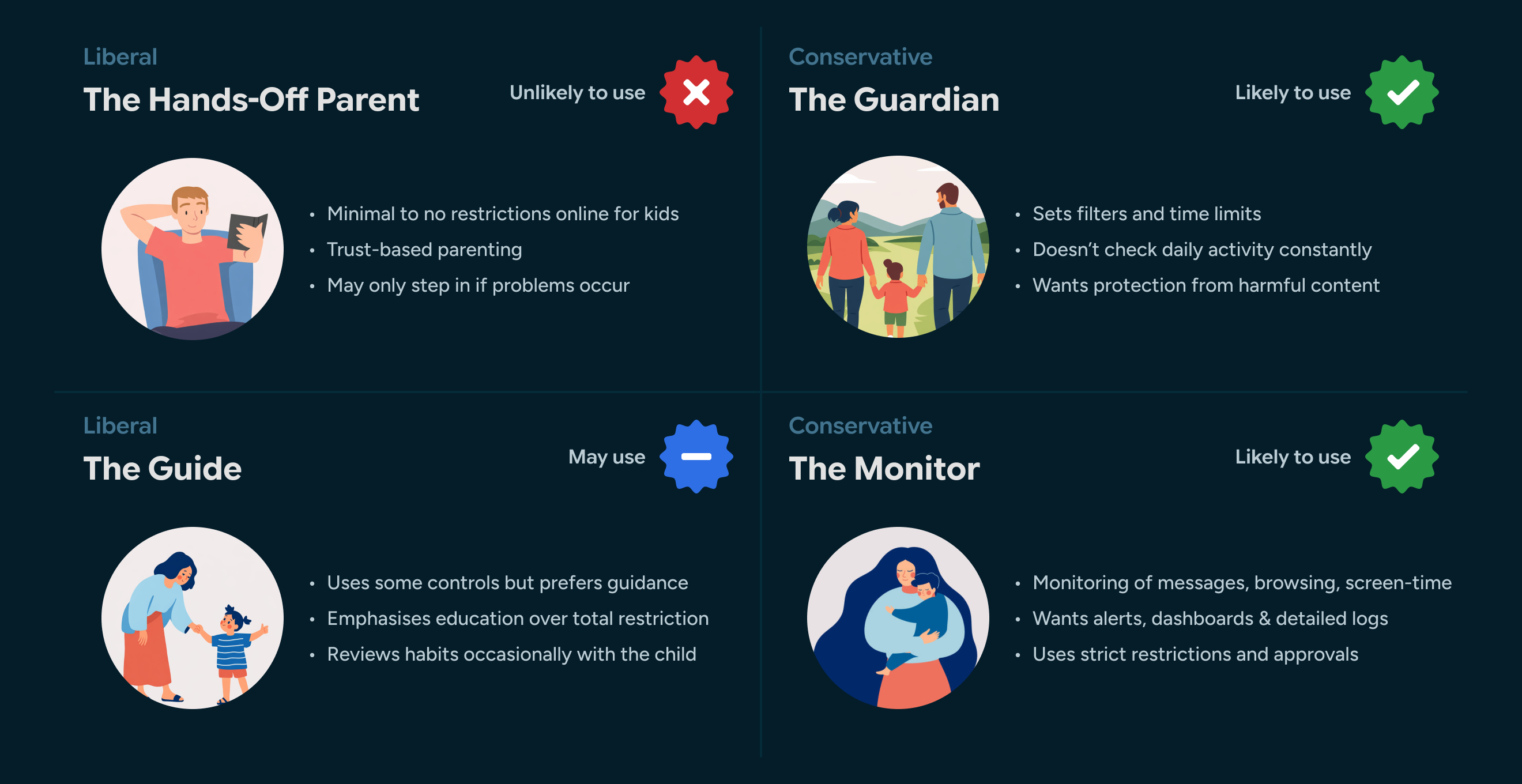
From exploratory research with 22 parents and additional contextual research, we identified 4 parenting style archetypes.
We focused the design around those most likely to use a parental control tool. As testing provided more insights they were refined.
The high-level idea
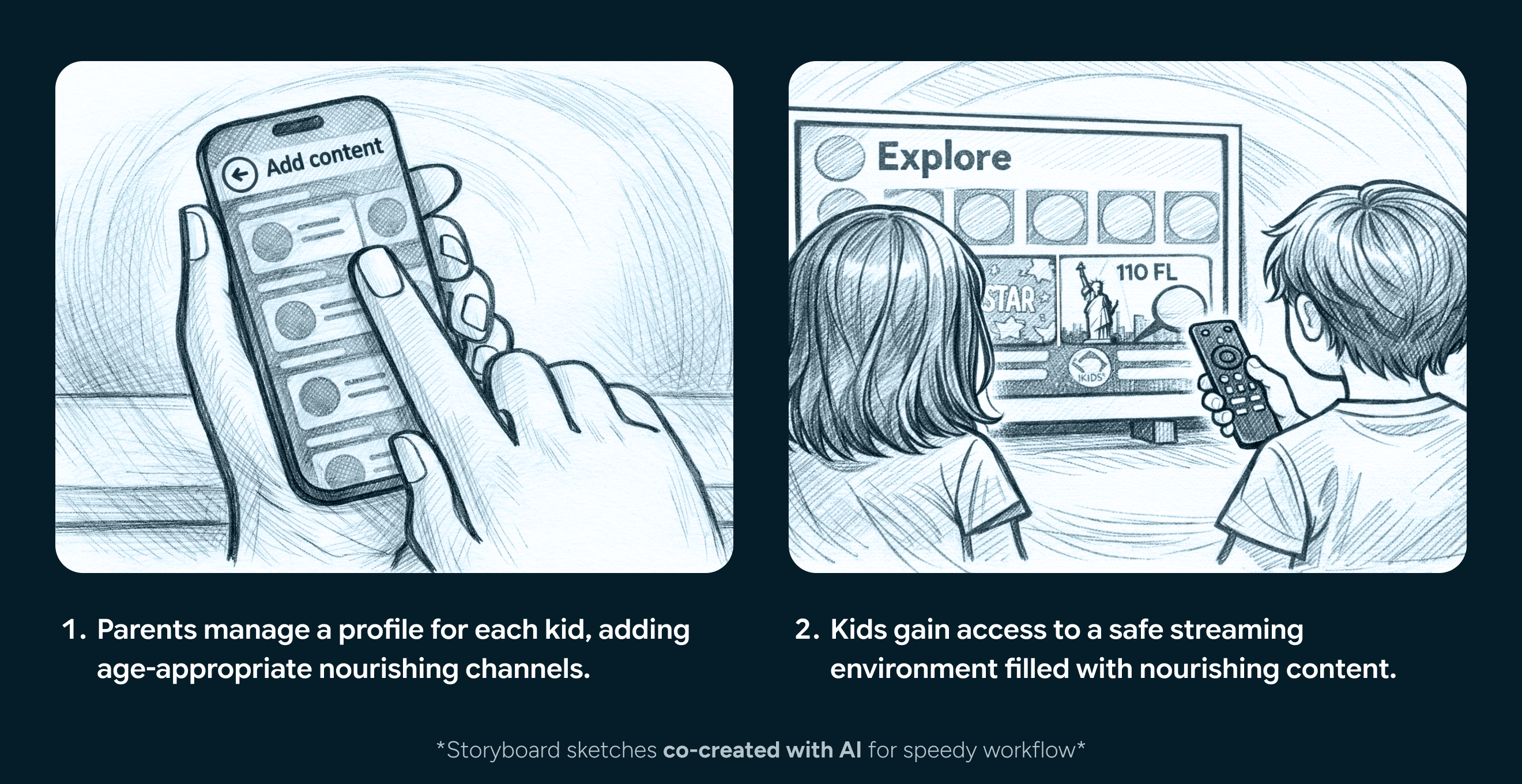
To begin the design, we developed a high-level concept for how the problem could be solved:
Unlike YouTube Kids, all content would be blocked by default, with parents approving only channels aligned with their values.
User testing plan
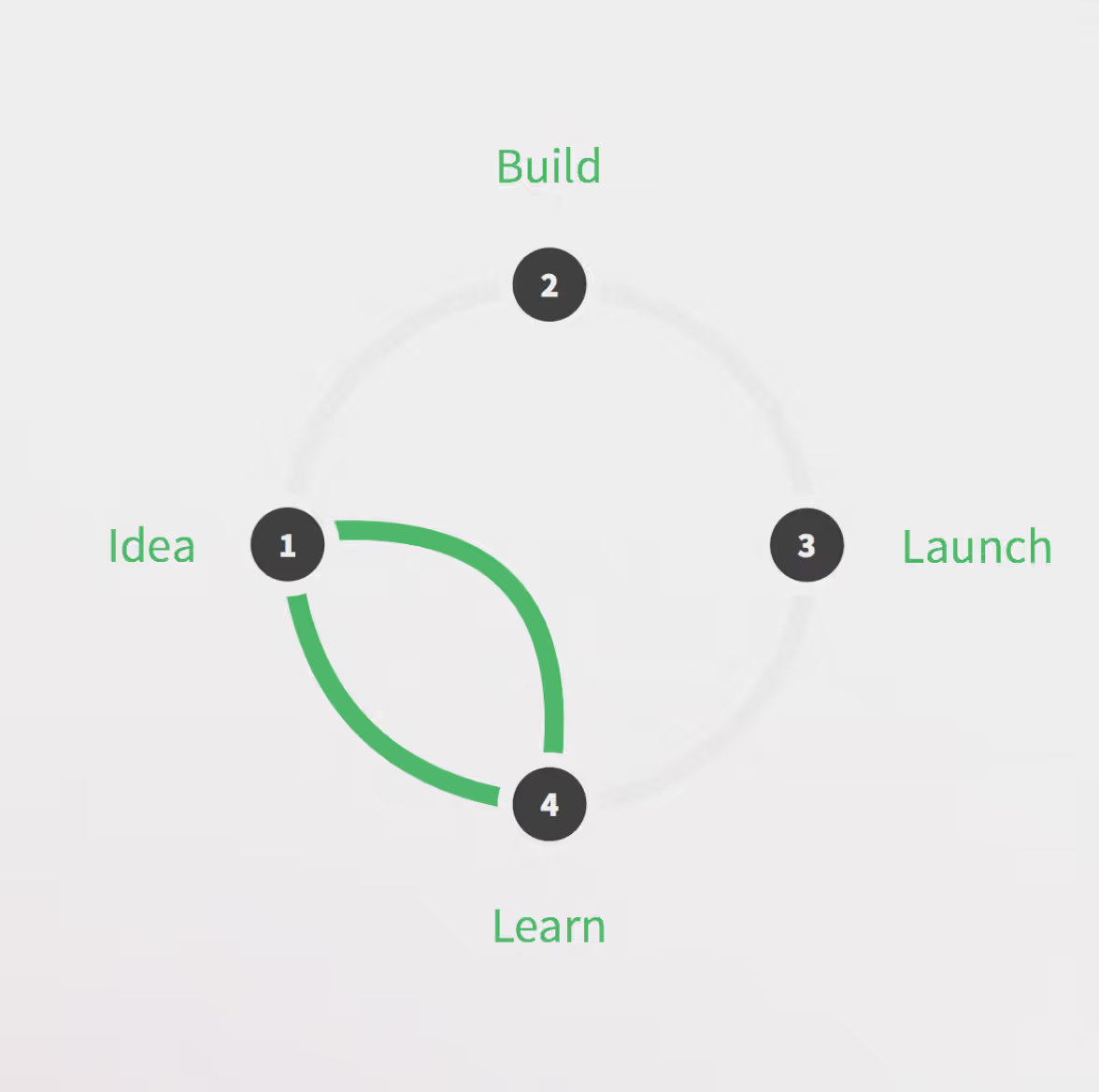
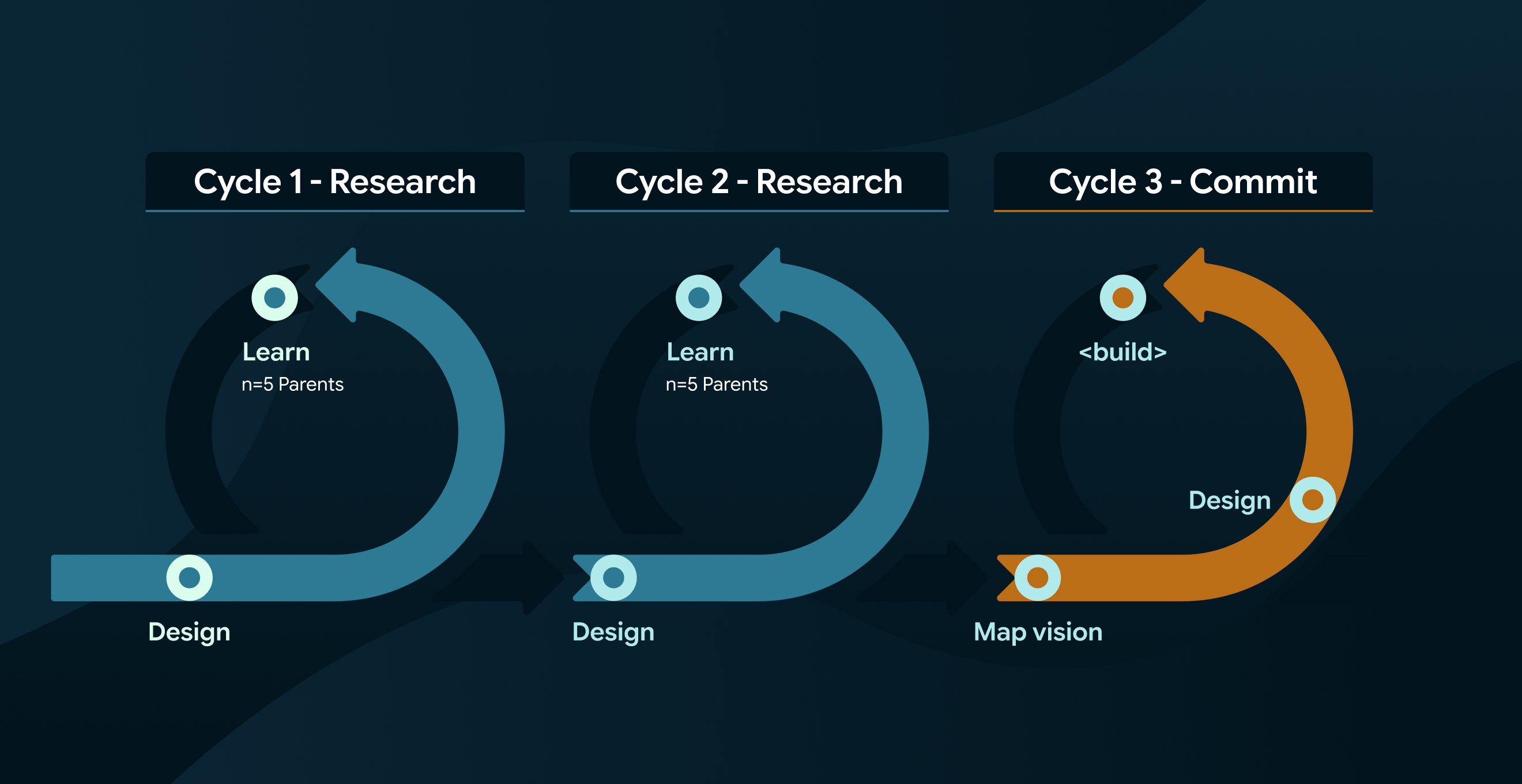
The project was constrained by a limited budget so I worked with the team to structure 10 participants across two lean user testing sprints.
The aim was to maximise learning across each cycle.
User testing focus
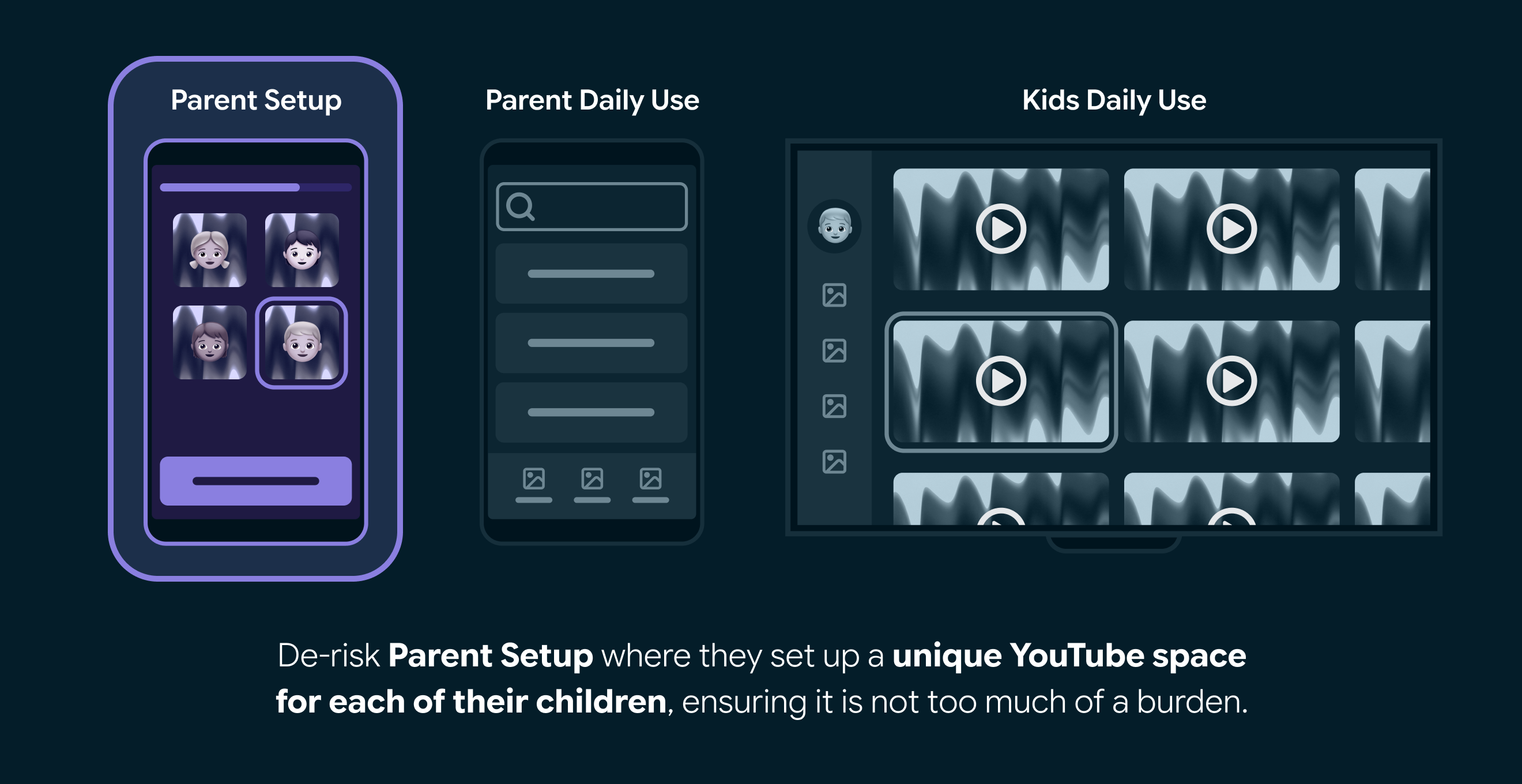
We decided to focus the user testing on de-risking the highest risk section of the concept:
Would parents be willing to take on the burden of setting up a unique YouTube space for each of their children?
This created an opportunity to explore methods of strategically reducing the burden of initial setup.
Cycle 1 • Design
With another Product Designer, I started brainstorming methods of reducing setup burden, through discussion we selected a single direction that seemed to show the most promise.
Hypothesis
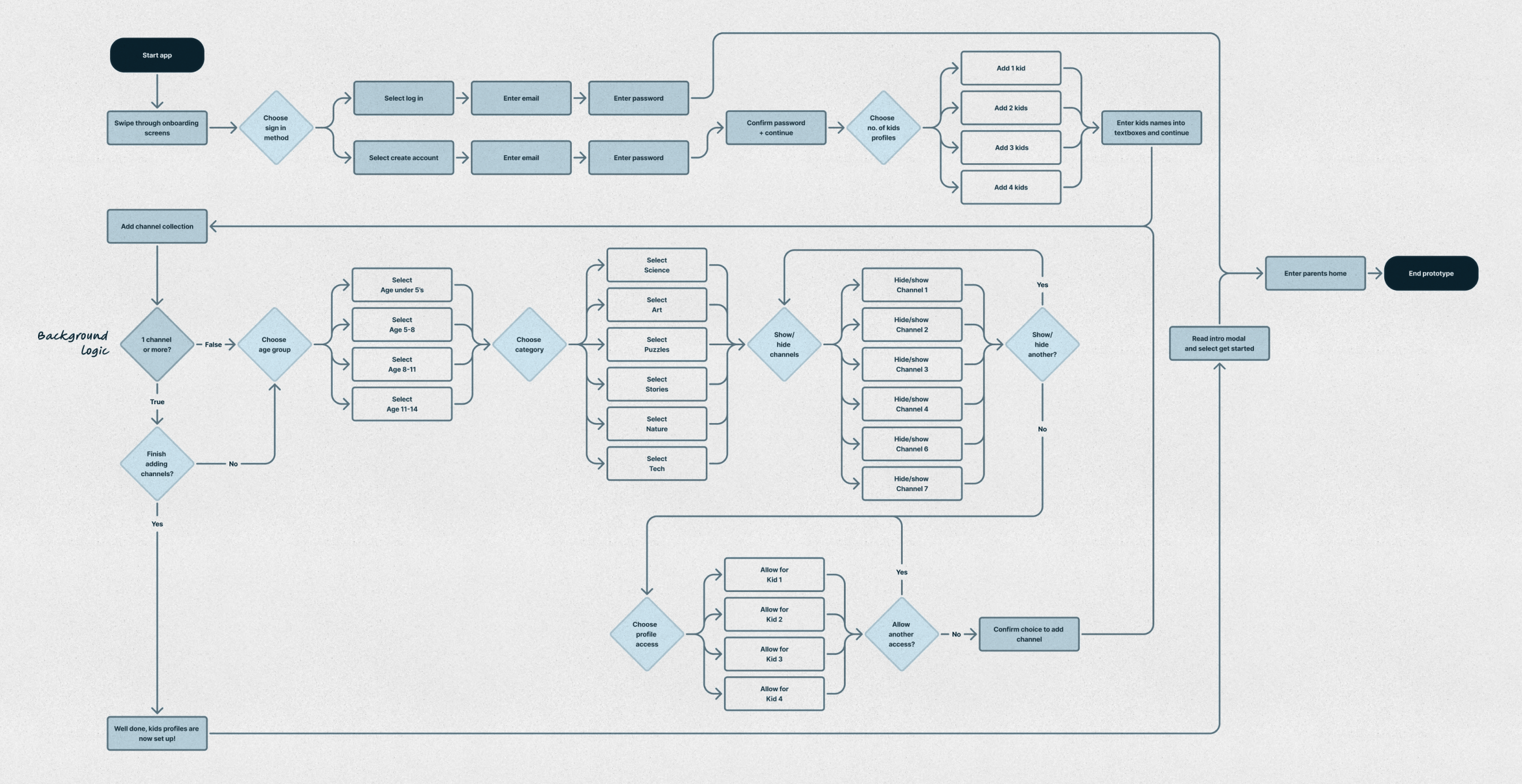
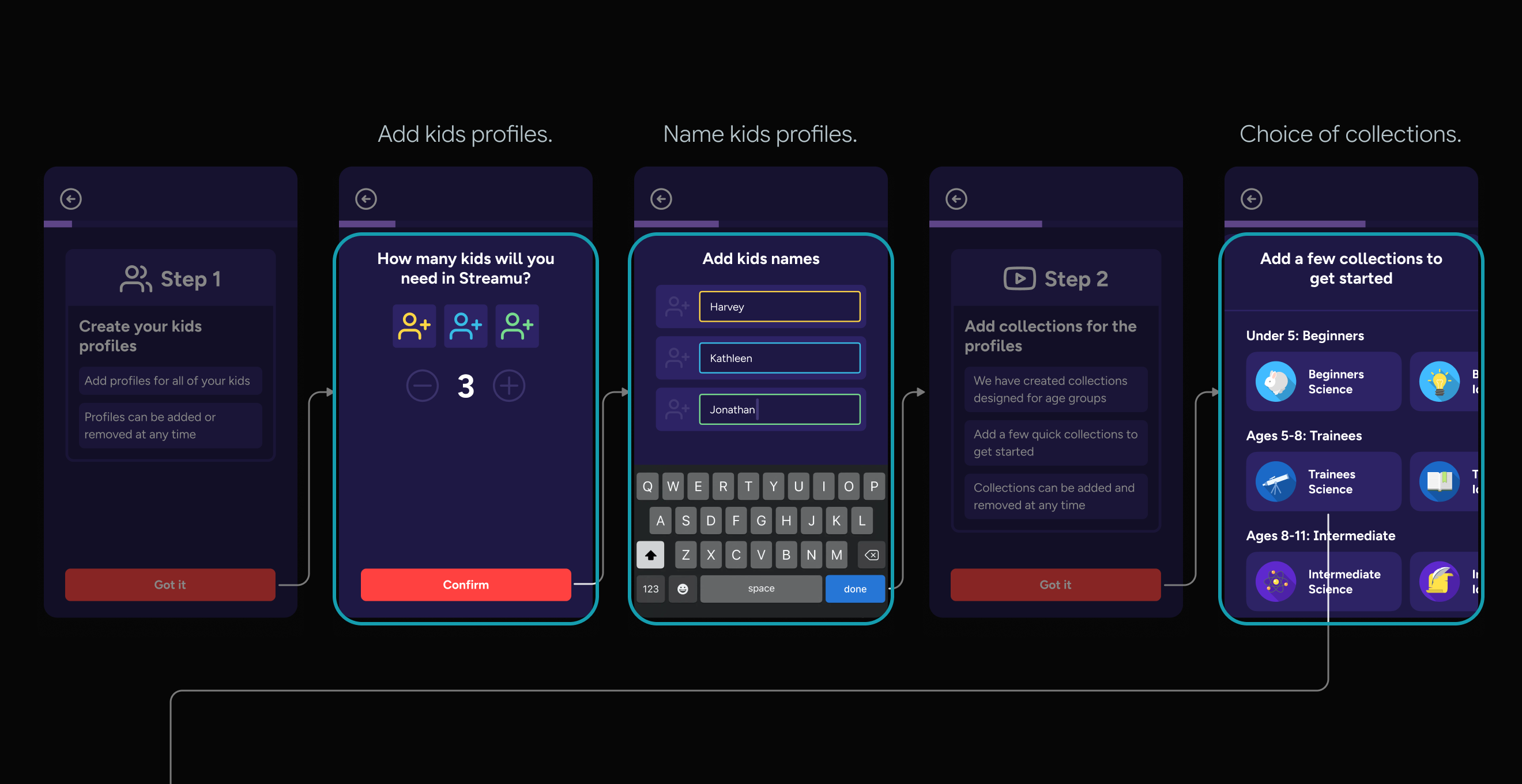
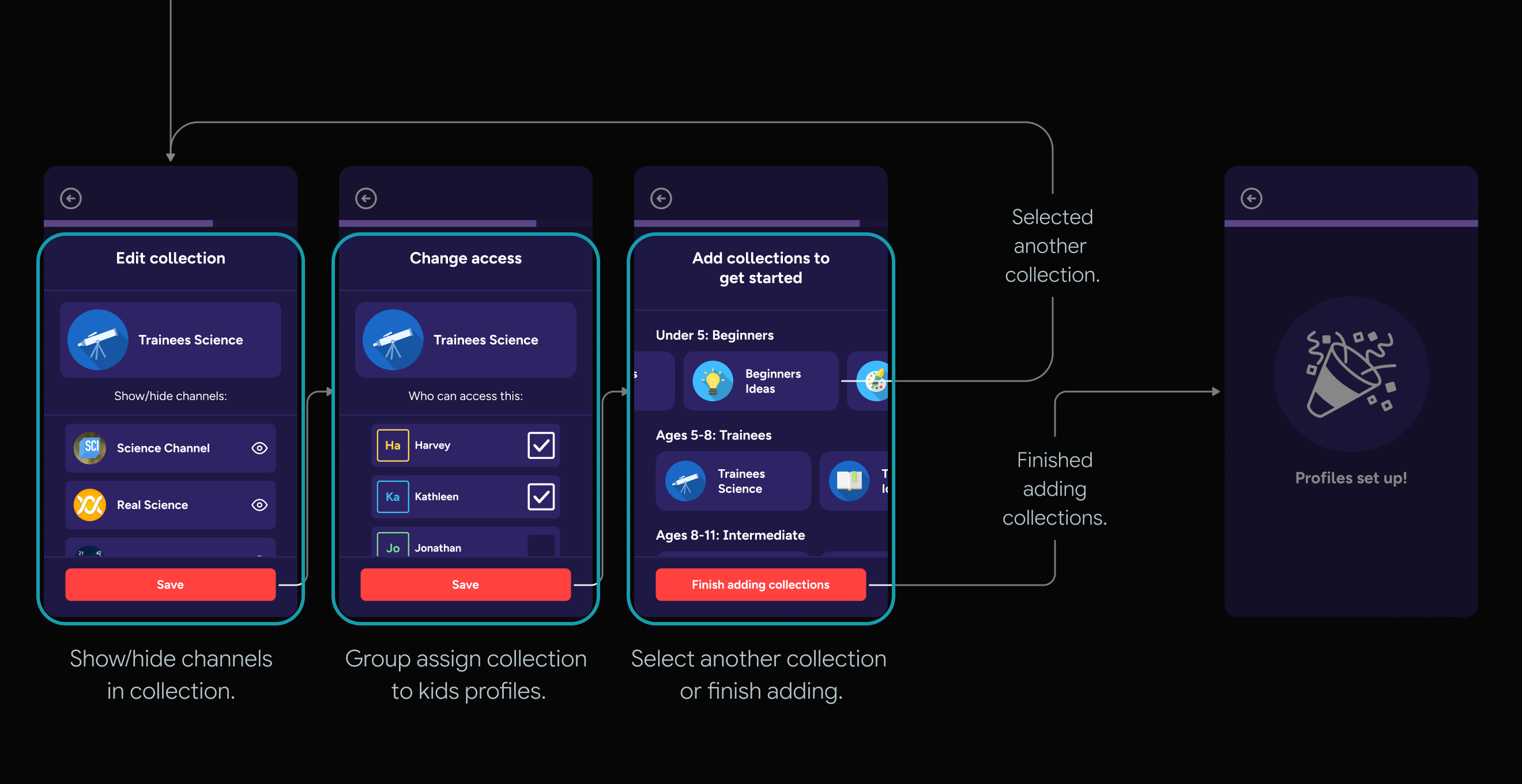
If parents can add curated, interest-based collections of YouTube channels (created by us) and assign them to individual children, they will find it easy to set up and manage multiple profiles and feel in control of their kids YouTube space.
I then translated the process into a user flow of the experience for the first round of user testing.
There were other projects running in parallel, so the 80:20 rule guided many of the design decisions.
Cycle 1 • Prototype
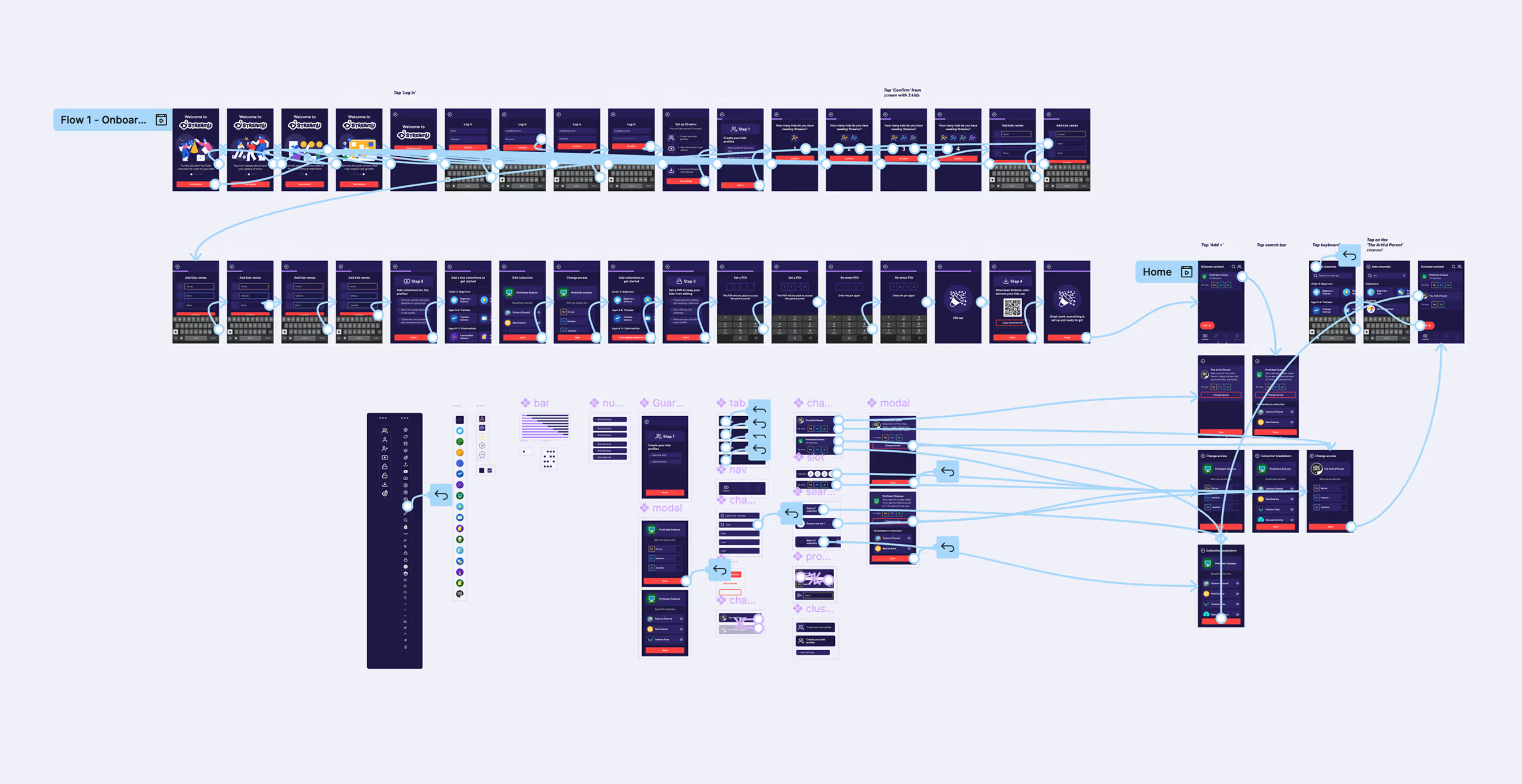
Since the problem centred on user burden, I designed & built a simple prototype of this process to test with participants to gain initial learnings in the user test quickly.
Cycle 1 • User testing
To test the hypothesis we ran a study through UserTesting.com with five parents whose children regularly use YouTube/YouTube Kids.
Cycle 1 • Analysis and results
We synthesised the user testing findings into actionable insights to guide the next iteration.
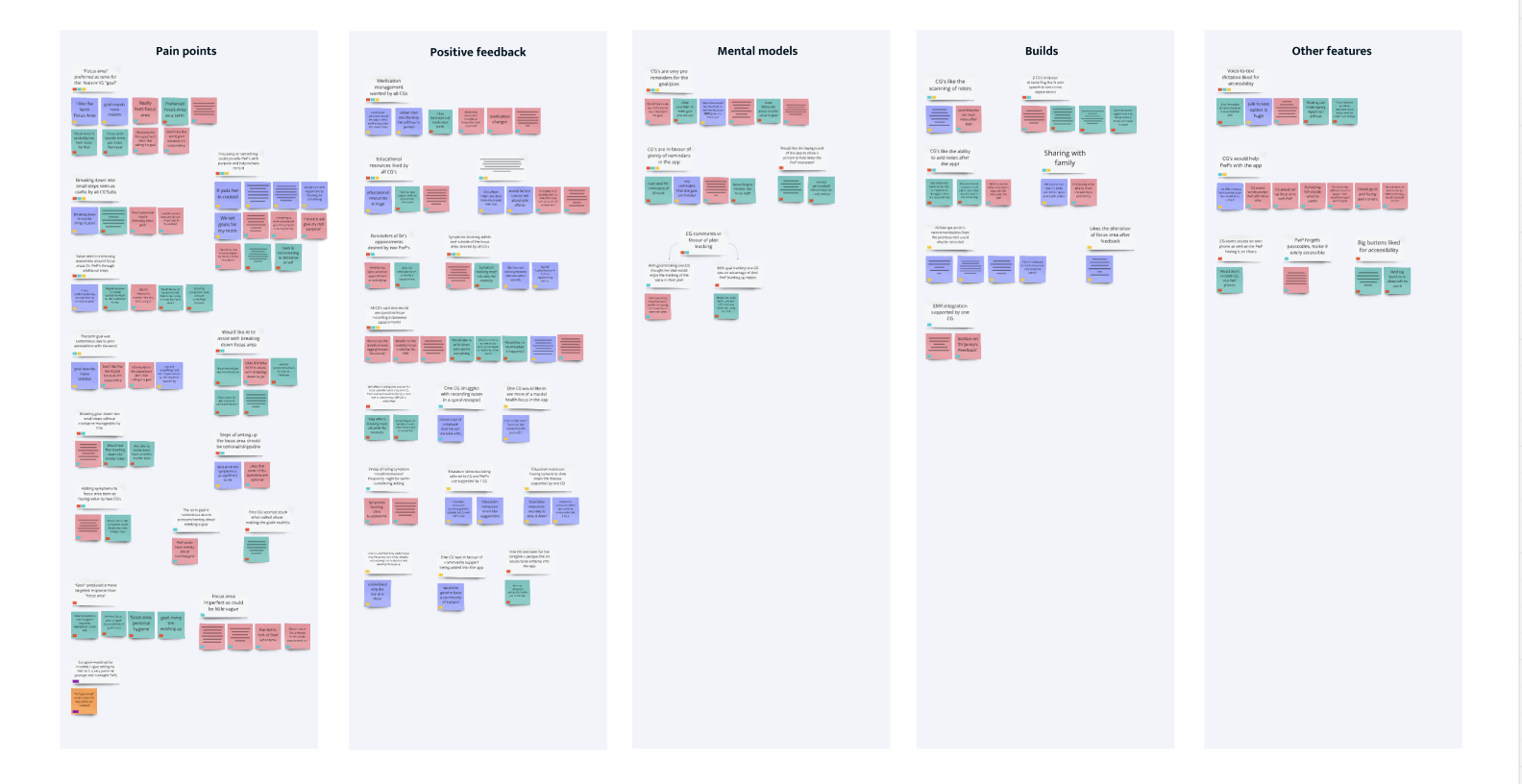
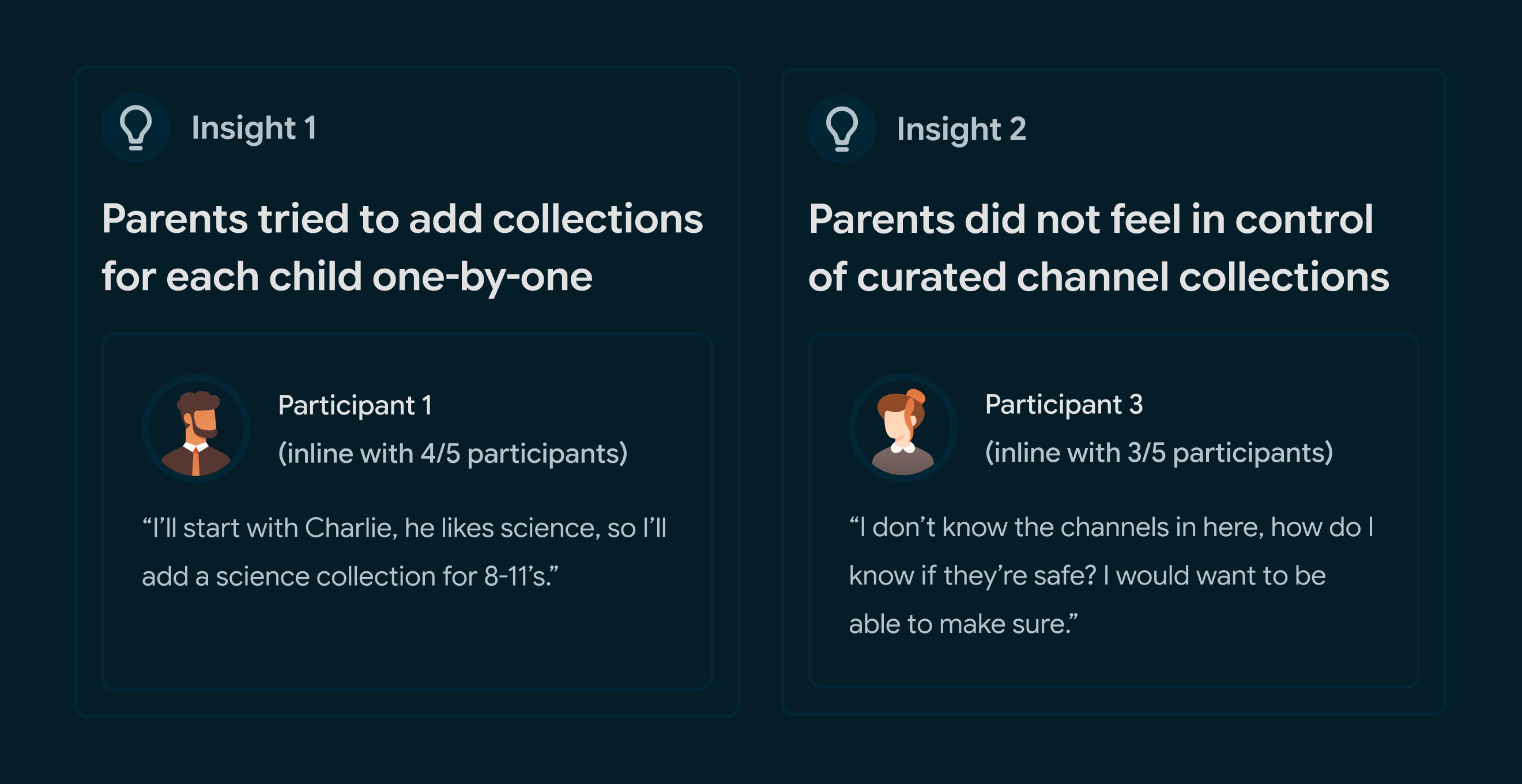
These insights emerged through affinity mapping, and two key insights shaped the next design iteration.
Cycle 2 • Redirect and rethink
We discussed the findings as a team, the plan to reduce burden had not seemed to work. The discussion surfaced a new hypothesis appearing capable of resolving most key issues in one sweep.
Hypothesis
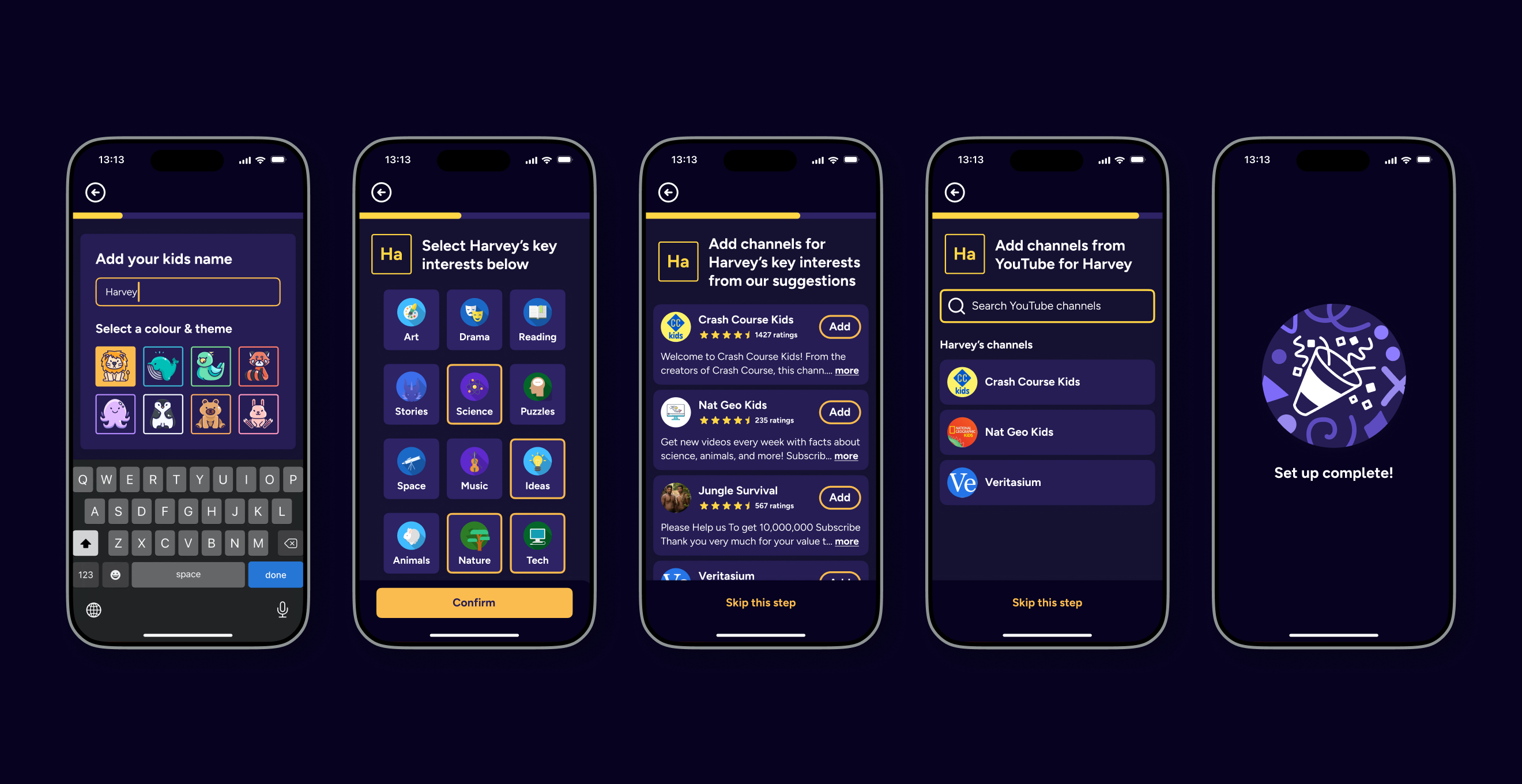
If parents select interests for each child, then add parent reviewed interest-based channels for each child separately, they will find the setup process more intuitive, better aligned with their mental models and feel more in control.
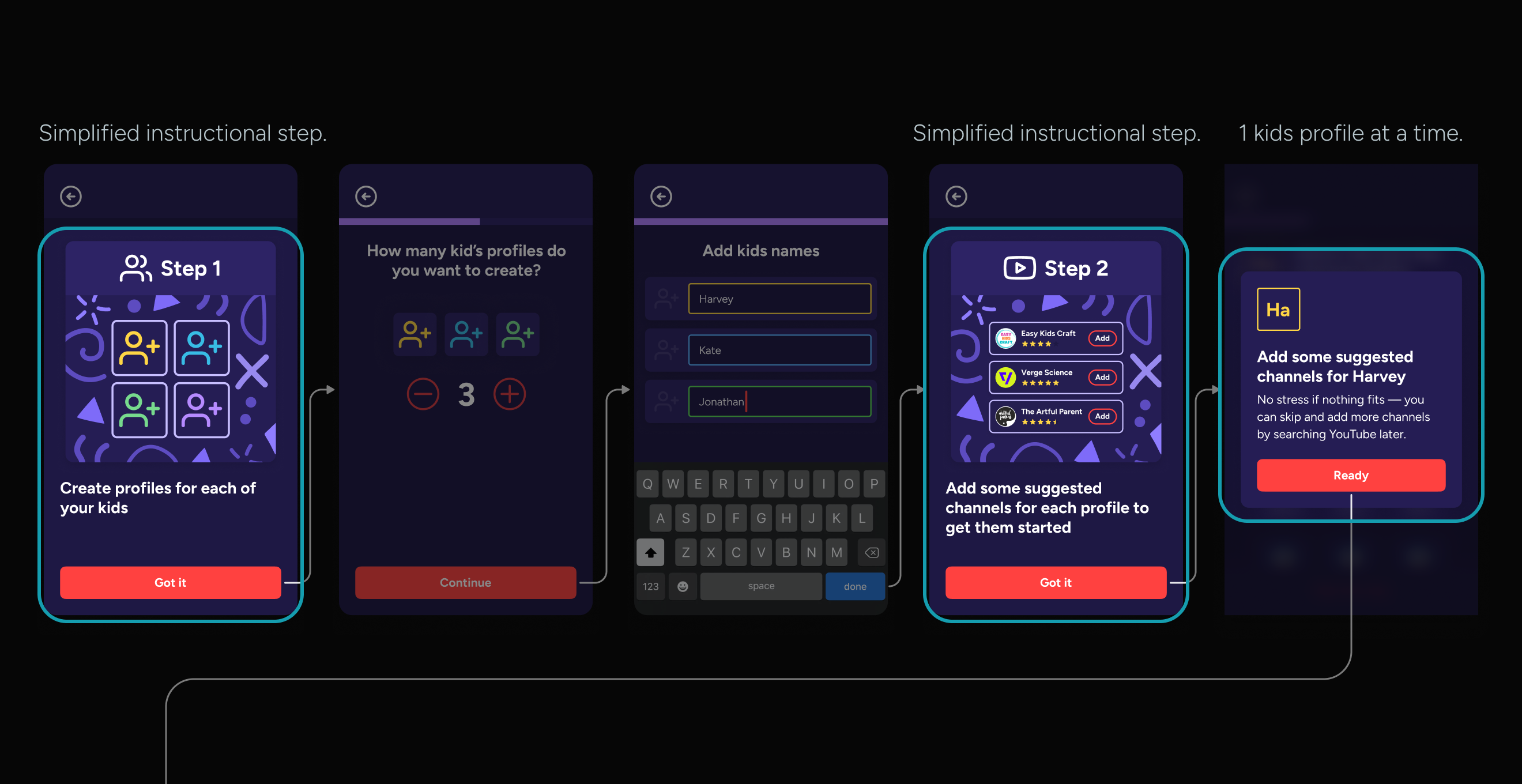
I redesigned the user flow to guide users through the revised process.
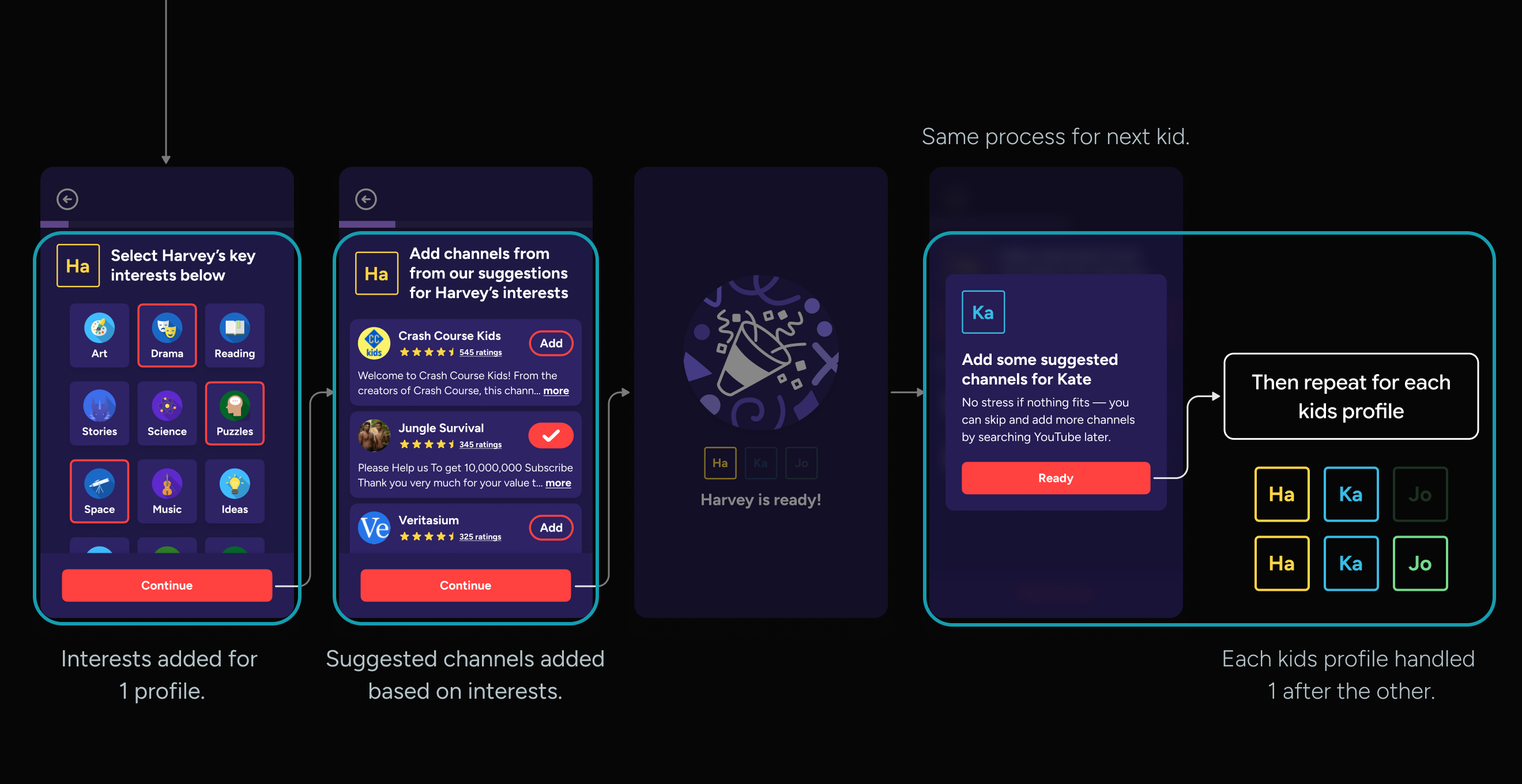
Cycle 2 • User testing
I then integrated the updated user flow into a new prototype as the test stimulus and ran a second round of testing with a new set of five participants whose children regularly use YouTube or YouTube Kids.
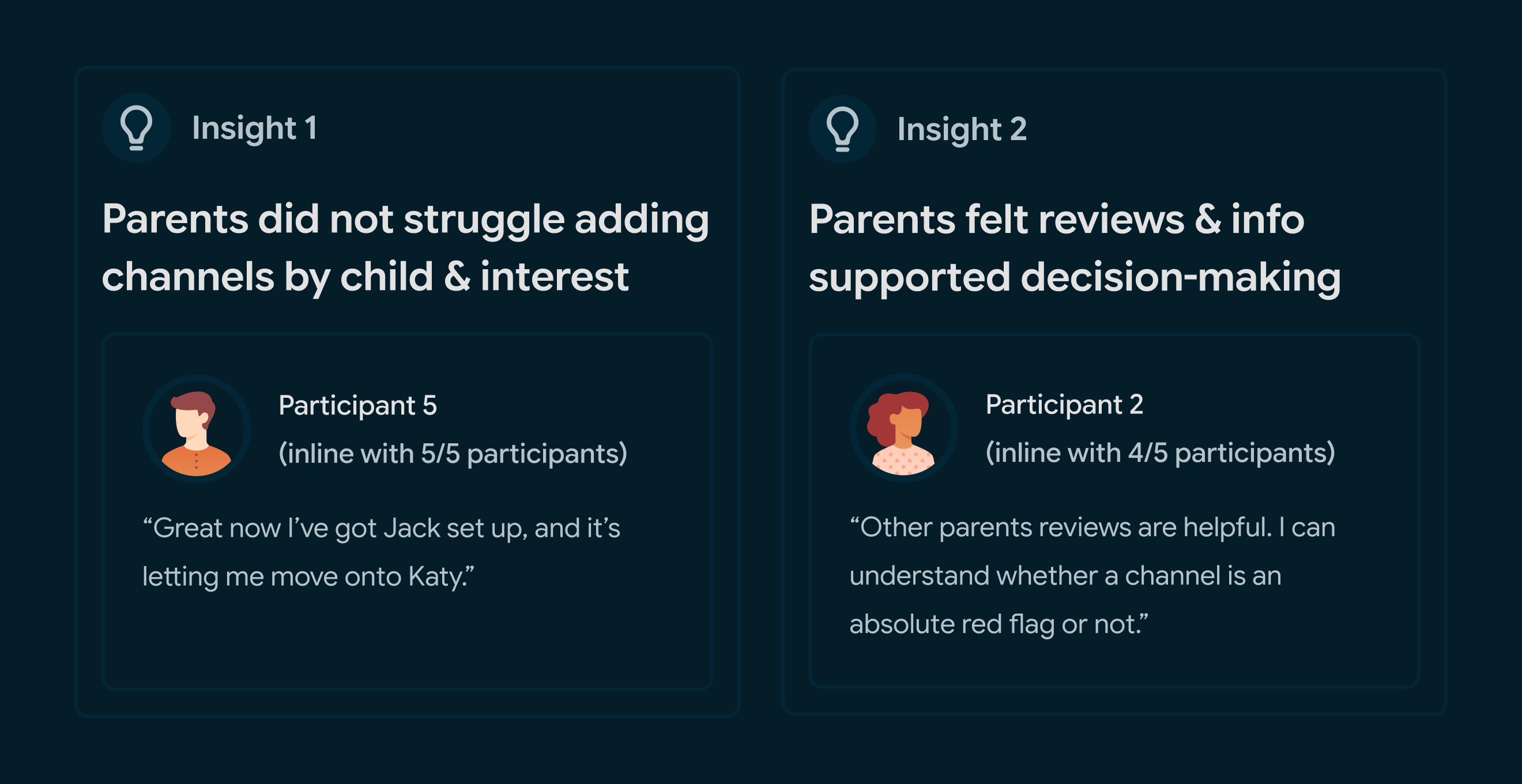
And how did the Cycle 2 solution perform?
Across the study, parents consistently felt the app successfully solved their core problem.
Solves my problem — 5/5 participants
Overwhelmingly positive feedback — 5/5 participants
High benefit + low burden — 5/5 participants
With a small sample size (n=5), we avoided drawing strong conclusions, but the results were a promising signal.
Cycle 3 • Next steps
We discussed the findings as a team and concluded while further refinements could be made, the channel selection process had been validated sufficiently (for now) as it presented much less of a risk.
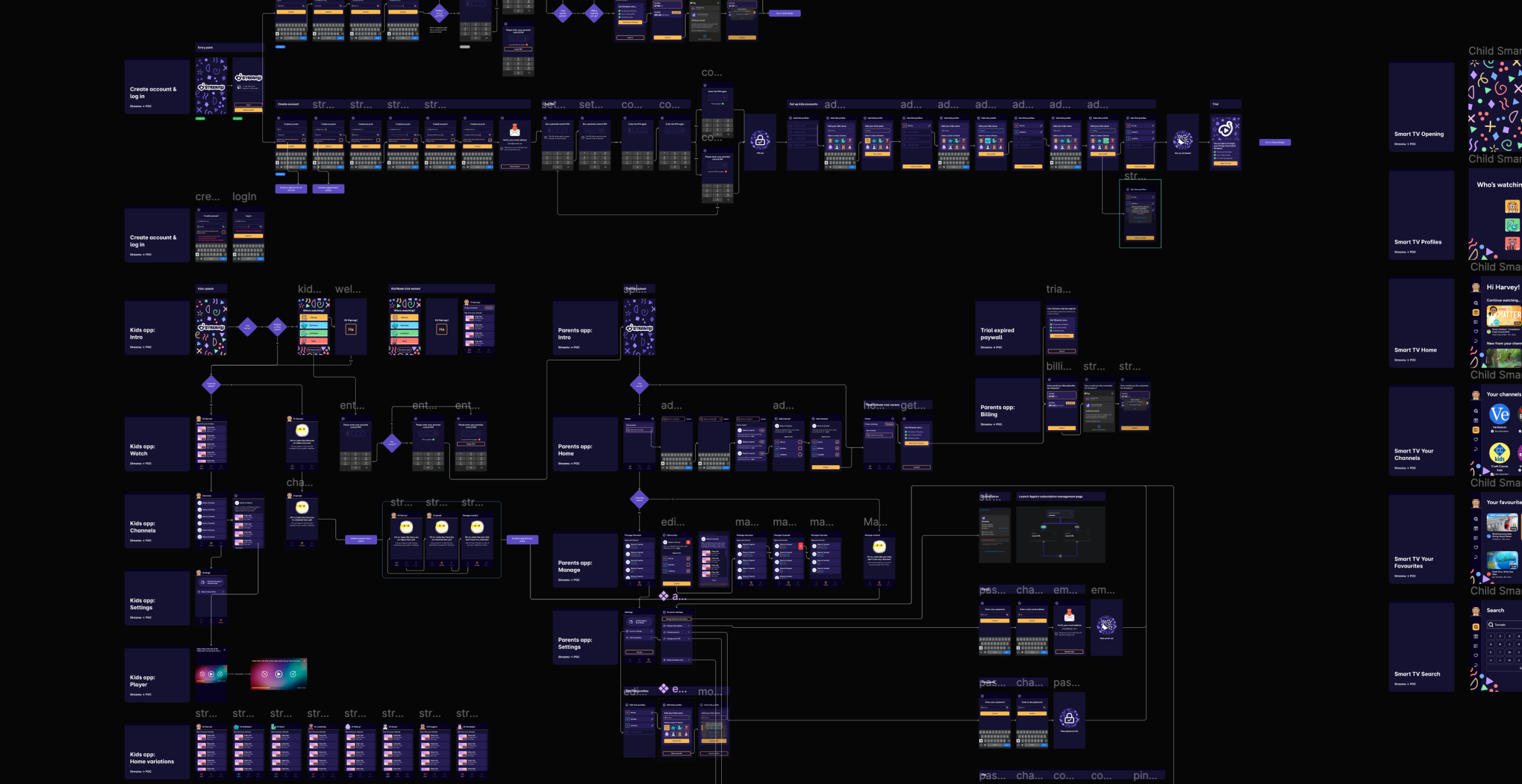
Integrating the adjustments, I then mapped out how the product would connect in flows from a broader perspective and how the different parts would fit together.
Results
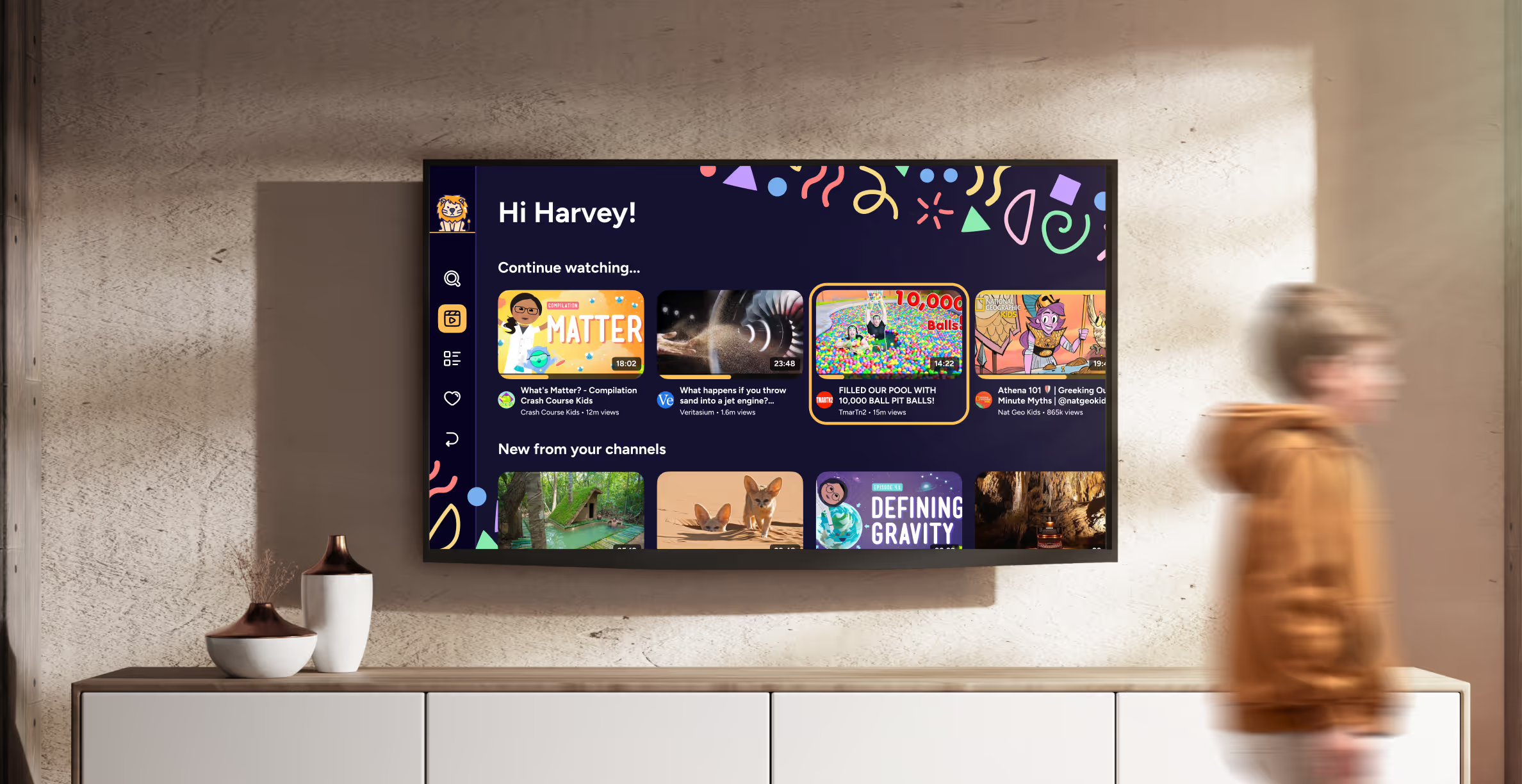
The final product unified insights from research, testing, and technical exploration into a complete system.
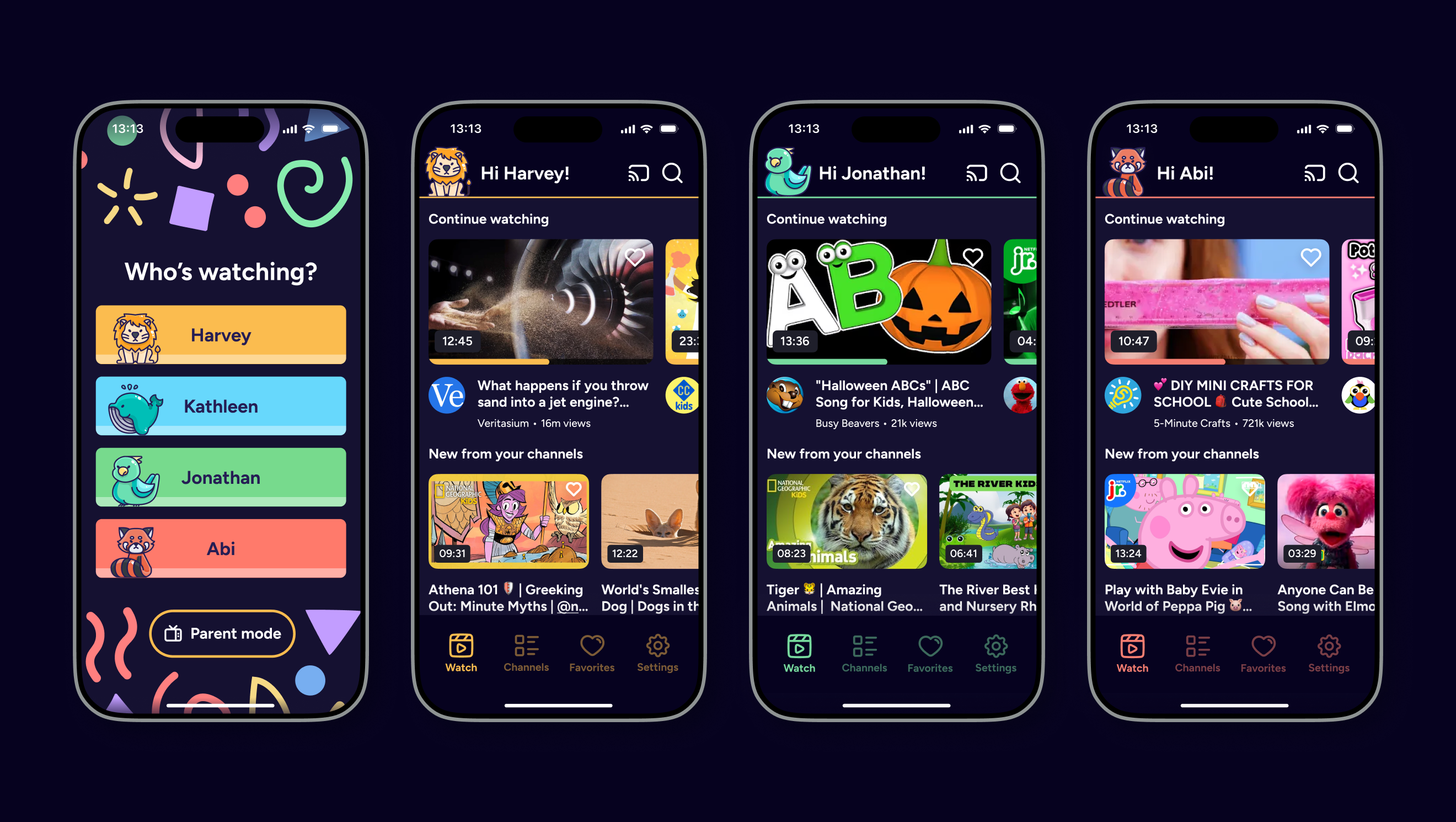
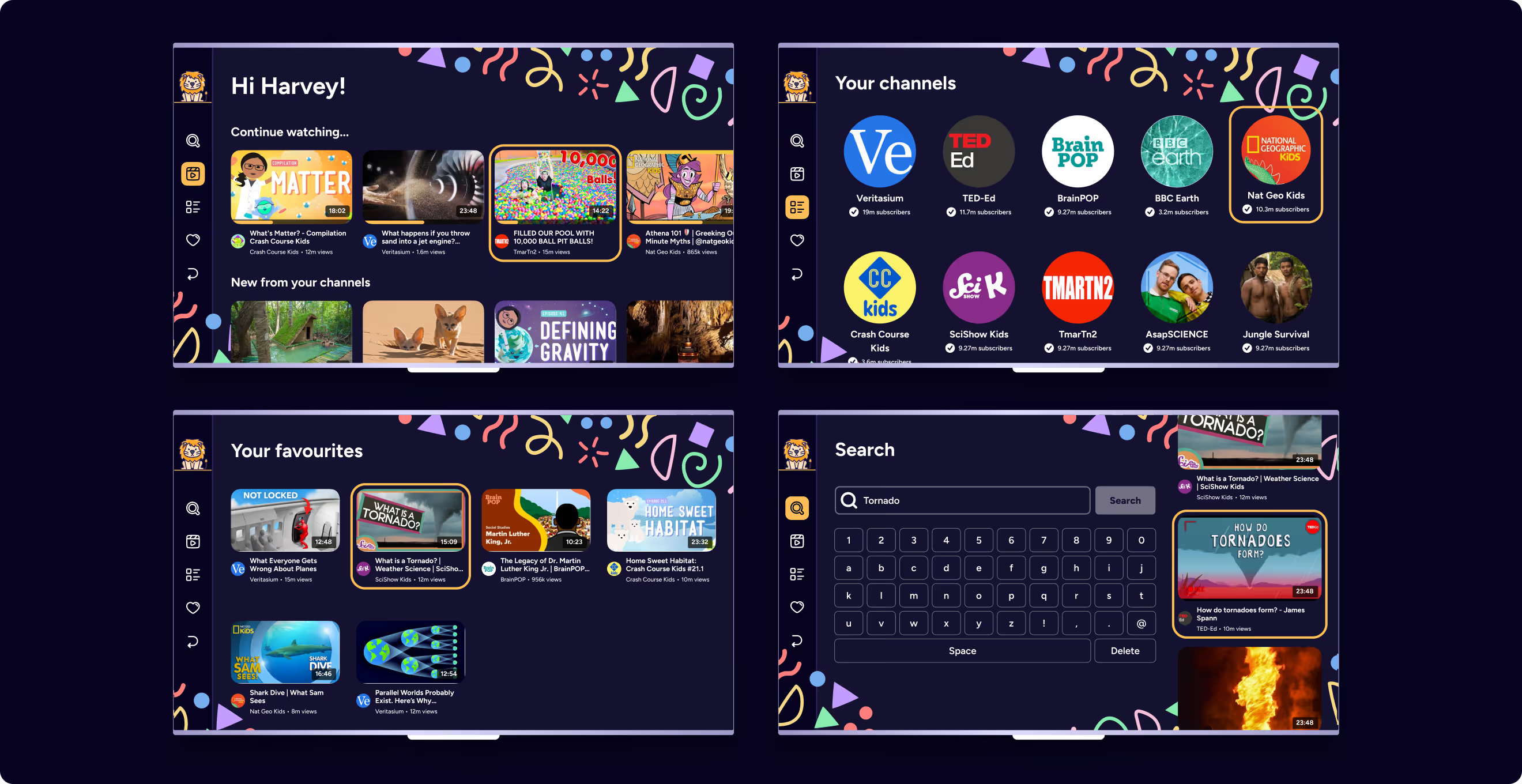
The core product includes a parent mobile app for managing channels and a kids Smart TV app for viewing them.
Plus a strategic delighter
To encourage parents to use the app, we went back to our initial exploratory research with 22 parents in the US and UK.
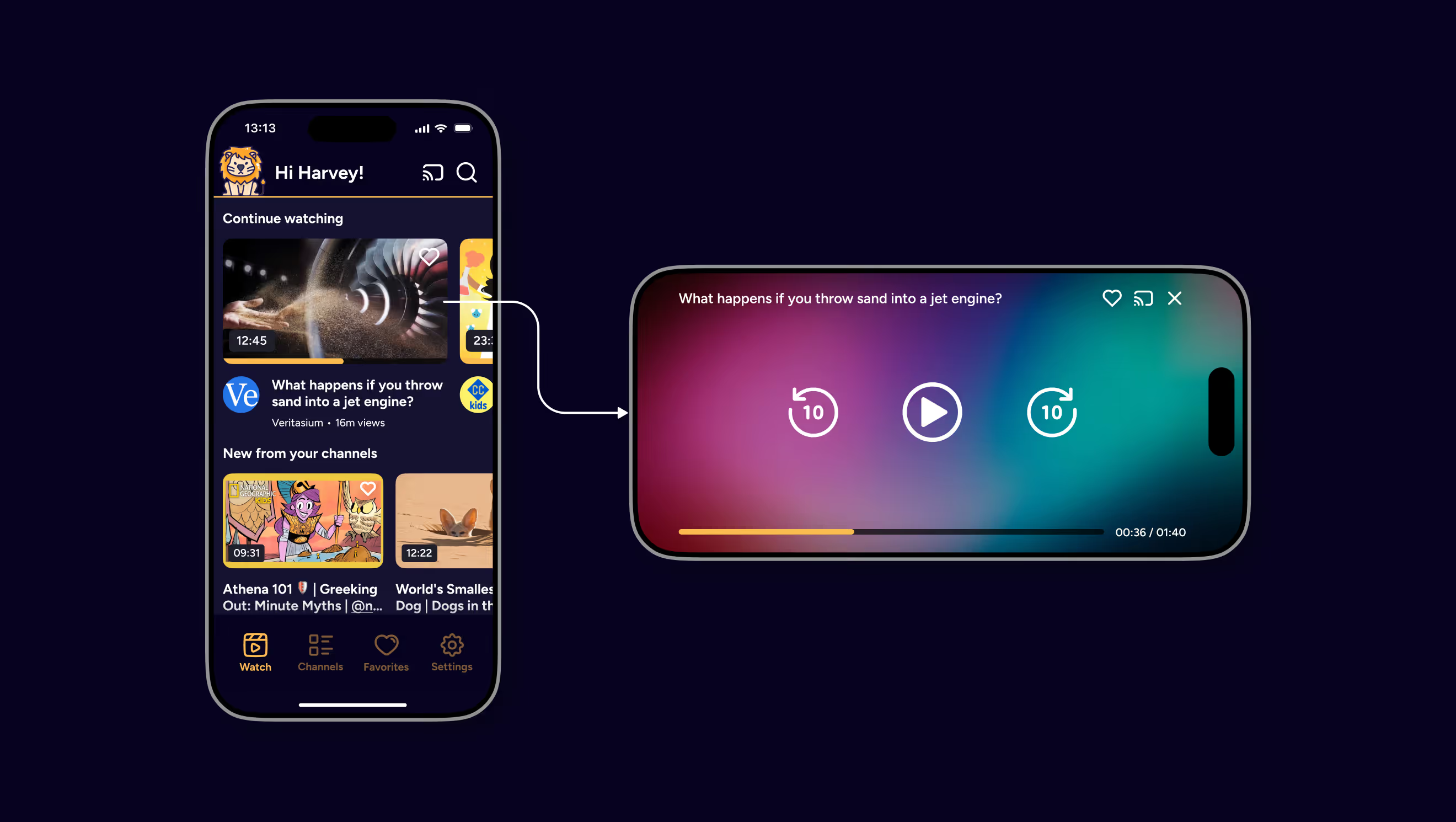
I suggested the introduction of a “Pacifier Mode” in the parent app, which would allow parents to hand their phone to their child in the car or on the go with access to all the content from the kids Smart TV app.